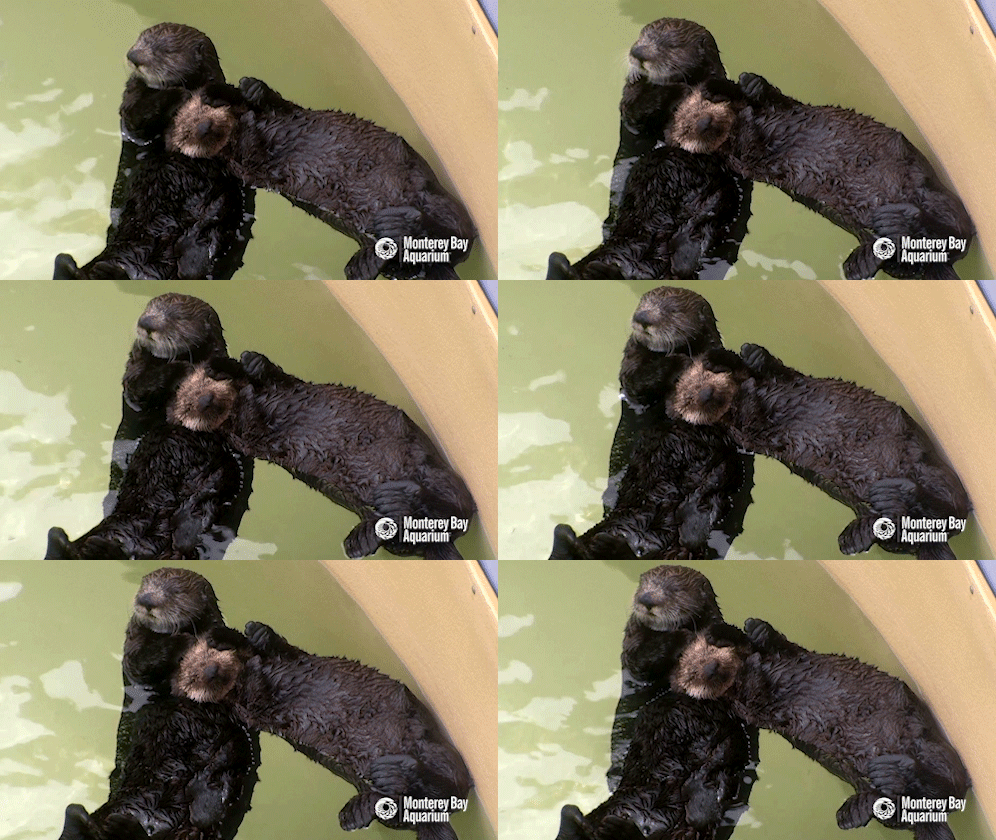
Selka, the newest member of our Sea Otter exhibit, is a rescued
California sea otter pup that survived a shark bite and has contributed to
important research into understanding her species.
Now she’s adjusting well to a busy life with her fellow otters and
human trainers, and is on track to becoming our newest surrogate otter mother for
stranded pups that we’ll return to the wild.
But, just how does that happen?
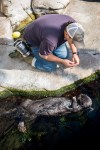
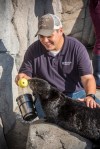
Christopher Quintos, senior sea otter aquarist, is training
Selka on exhibit manners and routines, and guiding her entry into becoming a
surrogate mother. Christopher explains that we’re not specifically training Selka to
be a surrogate mother—that’s mostly up to her.
“Just the fact that she’s with other animals is really good
practice for when she’s put with other unfamiliar or younger animals,” he says. “Her whole initiation into the surrogate program will be slow and at her
own pace. We’re starting to see Selka show some material behavior toward some
of her exhibit mates, so it’s very likely she will come to that maternal
instinct on her own.”
Christopher adds that overall training is going very well.
He says Selka’s very sharp and has incredible focus. She quickly learned standard
exhibit behaviors, and seems to enjoy the work.
“Selka comes to us with a great foundation and behavioral
repertoire already,” Christopher says. “She really engages in training sessions and learns
very quickly.”
Conservation works! Roughly 60% of the sea otters in Elkhorn Slough are descendants of our Sea Otter Program—and they’ve helped transform the Slough into a thriving ecosystem. Get the full scoop in our latest video for Sea Otter Awareness Week!
This is huge news for us and a validation of all of the hard work our Sea Otter Program team has put into helping southern sea otters recover in central California. These findings may help sea otters return to habitat they once ranged in up and down the coast!



 Fibromyangela